




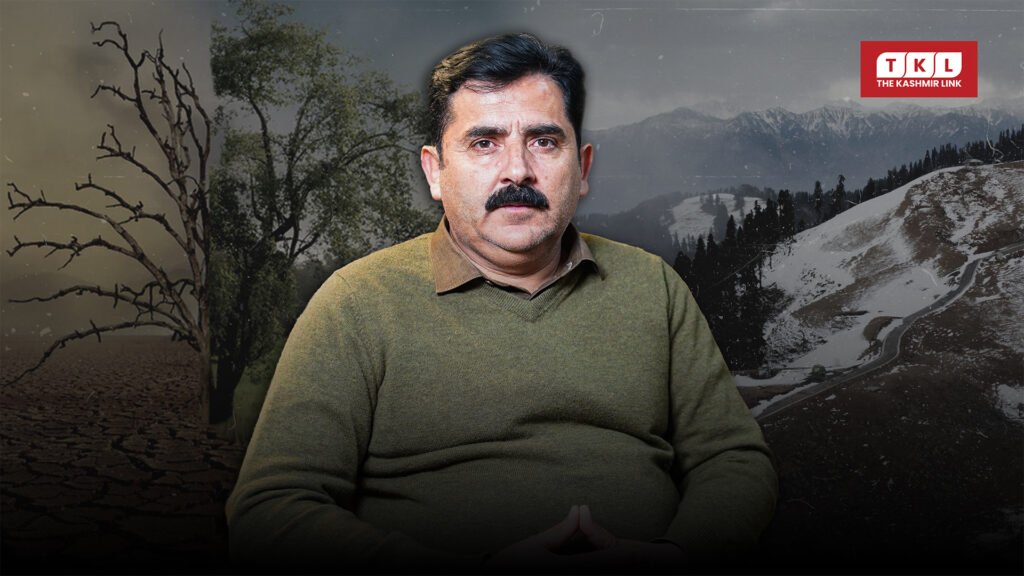
Climate-Affected Regions: Climate change is increasingly emerging as one of the most serious challenges facing the mountainous region of Azad Jammu and Kashmir (AJK). Rising temperatures, shrinking glaciers, and changing weather patterns are already beginning to affect water resources, agriculture, and local livelihoods.
In an in-depth interview, climate change expert Dr Sardar Muhammad Rafique explained that the global average temperature has increased by approximately one degree Celsius over the past six decades. However, the situation in Pakistan and particularly in Azad Kashmir is more alarming.
According to available data, Pakistan has experienced a temperature rise of around 1.3°C during the same period, while Azad Kashmir has seen an increase of more than 2°C between 1963 and 2013.
“If this trend continues,” Dr Rafique warned, “temperatures in the region could rise by another three degrees Celsius by the year 2050.”
Melting Glaciers and the Water Crisis
One of the most critical impacts of climate change in the region is the rapid depletion of glaciers. Nearly 80 percent of freshwater resources in Pakistan and Azad Kashmir depend on glacier systems located in northern mountainous regions.
Data from environmental reports indicate that glacier coverage in Azad Kashmir declined significantly between 2000 and 2017. During this period, glacier area decreased from approximately 15,111 hectares to nearly 11,350 hectares.
Experts fear that if this trend continues, many glaciers could disappear within the next few decades, creating severe water shortages.
“This will not only affect drinking water but also agriculture, hydropower generation, and overall economic stability,” Dr Rafique said.
Changing Weather Patterns
Climate change is also altering seasonal cycles in the region. Over the past 30 years, Pakistan has experienced an increase of more than 30 summer days, while the durations of spring, autumn, and winter have shortened.
In Azad Kashmir, the change has been even more dramatic, with about 45 additional summer days recorded over the same period.
Snowfall patterns have also shifted. In the past, snowfall often began in November, but in recent years it rarely occurs before mid-January.
Agriculture and Traditional Crops at Risk
Agriculture, which forms the backbone of rural livelihoods, is also under pressure due to rising temperatures.
Traditional planting and harvesting seasons have been disrupted, and several indigenous crops are gradually disappearing.
In the Neelum Valley, a traditional crop known locally as Tromba, scientifically classified as buckwheat, was once widely cultivated in high-altitude areas. Due to warmer temperatures, maize cultivation has expanded in these regions, replacing the traditional crop.
Today, Tromba survives only in a few isolated pockets near Taobat.
Climate-Induced Migration
Another growing concern is climate-induced migration.
In remote valleys such as Shounter, Sargan, and Gurez, unpredictable climate conditions and longer winters are already forcing some families to move toward larger towns.
Livestock-dependent communities, in particular, are facing difficulties due to prolonged snowfall and fodder shortages.
“If these trends continue, migration patterns may change dramatically in the coming decades,” Dr Rafique warned.
Tourism and Environmental Pressure
Tourism is considered one of the largest economic sectors in Azad Kashmir after water resources. However, the rapid expansion of tourism infrastructure without proper regulation is creating new environmental challenges.
Construction activities in scenic areas such as Neelum Valley have increased dramatically over the past decade, often without environmental planning.
“If tourism development continues in an unregulated manner, it may eventually damage the very natural resources that attract visitors,” Dr Rafique said.
He emphasized the need to promote eco-tourism as a sustainable alternative that protects forests, rivers, and wildlife while supporting local communities.
A Global Problem with Local Consequences
Despite contributing less than one percent to global greenhouse gas emissions, Pakistan remains among the countries most vulnerable to climate change impacts.
Dr Rafique stressed that adaptation strategies must become a top priority for the region.
“Climate change affects every sector—from water and agriculture to energy and public health. It must be integrated into development planning and treated as a national and regional priority,” he said.
Experts agree that without urgent action, the environmental and economic consequences of climate change could reshape the future of Azad Kashmir in the coming decades.


