




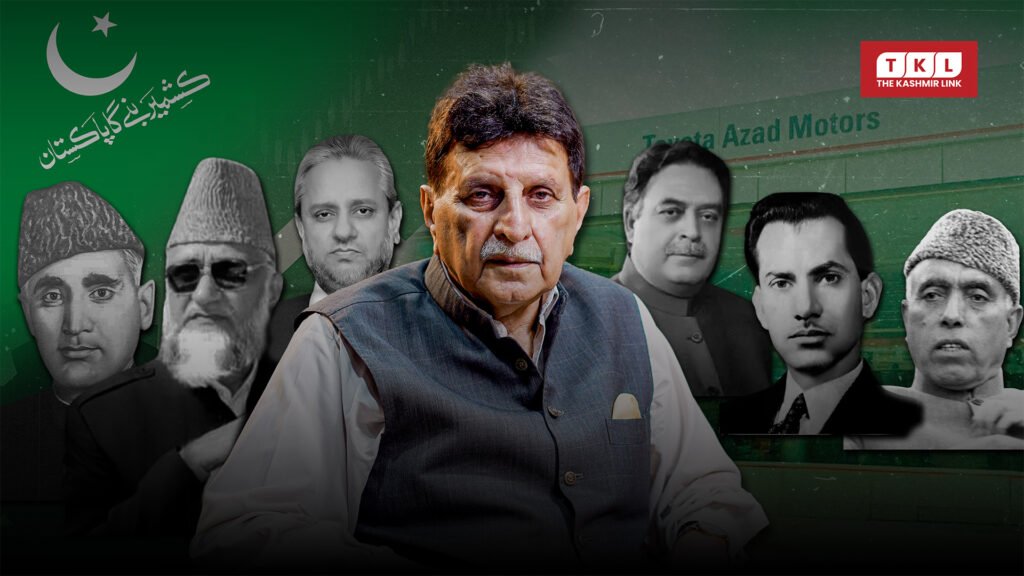
The All Jammu & Kashmir Muslim Conference was not created as an electoral machine. It emerged from resistance, sacrifice, and a collective Muslim awakening following the events of July 13, 1931—when 22 Kashmiris laid down their lives while facing bullets to their chests, not their backs.
Former Prime Minister of Azad Jammu & Kashmir, Raja Farooq Haider Khan, recalls that moment as the ideological foundation of Kashmiri political consciousness.
From July 13 to October 1932
The desecration of the Qur’an in Jammu, restrictions on sermons, and systemic humiliation of Muslims created conditions that made political organization inevitable. Leaders such as Sheikh Abdullah, Chaudhry Ghulam Abbas, Mirwaiz Yusuf Shah, and others rose to confront Dogra rule.
In October 1932, the Muslim Conference was formed, with Sheikh Abdullah as President and Chaudhry Ghulam Abbas as Secretary General.
Internal Differences: A Constant Struggle
Differences of vision between Sheikh Abdullah and Chaudhry Ghulam Abbas appeared early and never fully disappeared. Over decades, the party experienced repeated cycles of:
- Splits
- Reunifications
- Power realignments
Yet, despite everything, the party remained the symbolic trustee of Kashmir’s freedom struggle.
Leadership, Respect, and Political Ethics
Raja Farooq Haider recalls an era when leadership was respected not through authority, but dignity. Figures like Sardar Abdul Qayyum Khan and Sikandar Hayat Khan commanded reverence through character.
Political disagreements existed—but public humiliation of leadership did not.
The Final Fracture
The decisive breakdown came in the late 1990s and early 2000s. Despite attempts at reconciliation, internal rivalries, no-confidence maneuvers, and external political pressures fractured the party beyond repair.
By the time efforts were made to revive it, most of its political base had already merged into other platforms.
A Loss Bigger Than a Party
“The real loss,” Raja Farooq Haider says, “is not the Muslim Conference itself—but the loss of an independent Kashmiri political voice.”
While commitment to Pakistan remains unwavering, the absence of a unified Kashmiri party at the international level has weakened representation of the Kashmir cause.
A Message to the Next Generation
The failure, he admits, lies partly in not training the next generation politically—allowing opportunism to replace ideology.
“Political workers are not meant for government jobs. Politics is sacrifice.”
The story of the Muslim Conference is the story of Kashmir itself—its courage, divisions, sacrifices, and unresolved struggle. It was not destroyed by one person, but by a gradual erosion of unity and purpose.
History, as Raja Farooq Haider reminds us, does not forgive those who break trust.


