




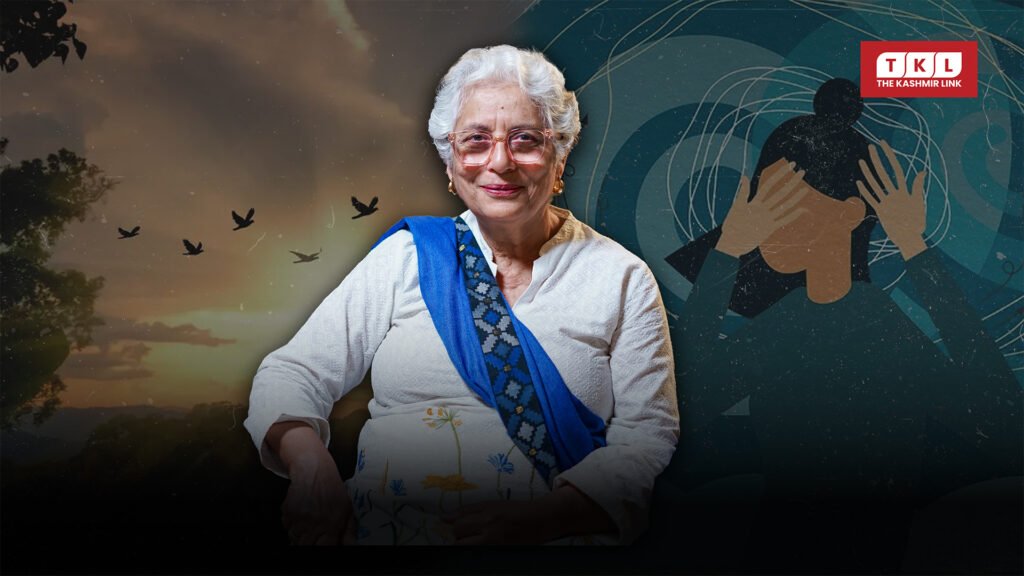
PTSD – Mental health is often discussed in terms of individuals, but what happens when trauma affects entire families, communities, and even generations? In a powerful conversation, renowned psychiatrist Dr. Ambreen Ahmed explored Post-Traumatic Stress Disorder (PTSD), generational trauma, collective suffering, and the remarkable resilience of the human spirit.
What Is PTSD?
According to Dr. Ambreen Ahmed, PTSD is not simply feeling upset after a difficult experience. It is a clinical condition that develops after exposure to severe trauma.
Examples of traumatic experiences include:
- Witnessing violence or death
- Physical assault
- Sexual violence
- Life-threatening situations
- Experiencing or witnessing extreme harm
Not every stressful event results in PTSD. The severity and nature of the trauma play an important role in diagnosis.
Common Symptoms of PTSD
One of the defining features of PTSD is that the traumatic event continues to affect a person long after the danger has passed.
Symptoms may include:
Intrusive Thoughts
People repeatedly relive traumatic memories even when they do not want to think about them. These memories may appear as:
- Disturbing thoughts
- Nightmares
- Unwanted memories
- Emotional distress triggered by reminders
Flashbacks
Some individuals experience flashbacks, where they feel as if they are back in the traumatic situation. These experiences can be so intense that the person physically reacts as though the event is happening again.
Avoidance
Many trauma survivors avoid anything associated with the traumatic event. They may avoid:
- Certain places
- Conversations
- People
- Memories
Some individuals even struggle to recall aspects of the traumatic experience.
Changes in Mood and Behavior
PTSD may also lead to:
- Depression
- Anxiety
- Anger
- Emotional numbness
- Loss of interest in life
- Distrust of others
- Self-destructive behaviors
- Substance misuse
When these symptoms persist for more than a month and significantly affect daily life, PTSD may be diagnosed.
Trauma Beyond the Individual
One of the most important themes highlighted by Dr. Ahmed was that trauma does not always affect only one person.
In areas affected by prolonged conflict, violence, restrictions, uncertainty, and fear, entire communities can experience psychological distress.
When people repeatedly witness violence, lose loved ones, face restrictions on movement, or live in constant uncertainty, the emotional consequences can be profound.
PTSD – Understanding Generational Trauma
Dr. Ahmed discussed the concept of generational trauma, where the effects of suffering are passed from one generation to another.
A traumatic experience that affects grandparents can shape the lives of parents, which in turn influences children.
Families may pass down:
- Fear
- Anxiety
- Distrust
- Survival behaviors
- Emotional wounds
As a result, trauma can become embedded within family and community narratives over decades.
Collective Trauma and Society
Beyond individual and family experiences lies another phenomenon known as collective trauma.
Collective trauma occurs when an entire community shares experiences of loss, fear, injustice, displacement, or violence.
In such environments, psychological distress becomes widespread. People are not only dealing with personal pain but also living among others who carry similar emotional burdens.
This can influence social relationships, trust, education, economic development, and overall well-being.
The Impact on Education and Aspirations
Mental health cannot be separated from daily life.
Dr. Ahmed explained that when young people face prolonged uncertainty, educational disruptions, communication restrictions, or constant fear, their ability to focus and learn is affected.
Anxiety and depression often reduce concentration, motivation, and hope for the future.
Educational institutions may be disrupted, opportunities become limited, and aspirations may suffer as a result.
The Remarkable Power of Human Resilience
Despite discussing profound suffering, Dr. Ahmed emphasized an equally important truth: human beings possess an extraordinary capacity for resilience.
History repeatedly shows that individuals can emerge from trauma with a commitment to healing, understanding, and peace.
Even people who have suffered immense personal losses sometimes choose reconciliation over revenge and hope over hatred.
This resilience demonstrates that trauma does not have to define an individual’s future.
Can PTSD Be Treated?
The answer is yes.
PTSD is a treatable condition. Effective treatment may include:
- Professional therapy
- Psychological support
- Community support systems
- Appropriate psychiatric care when needed
However, outcomes often depend on:
- The severity of trauma
- Access to treatment
- Family and community support
- Early intervention
The earlier people seek help, the better their chances of recovery.
A Message of Hope
Dr. Ambreen Ahmed concluded with an important message: people should never suffer in silence.
Just as physical pain deserves medical attention, emotional pain deserves care and support.
Seeking help is not weakness. Reaching out, talking to trusted people, accessing mental health services, and acknowledging emotional struggles are essential steps toward healing.
Every individual matters. Every person’s mental health matters. And no one should have to carry the burden of trauma alone.


