




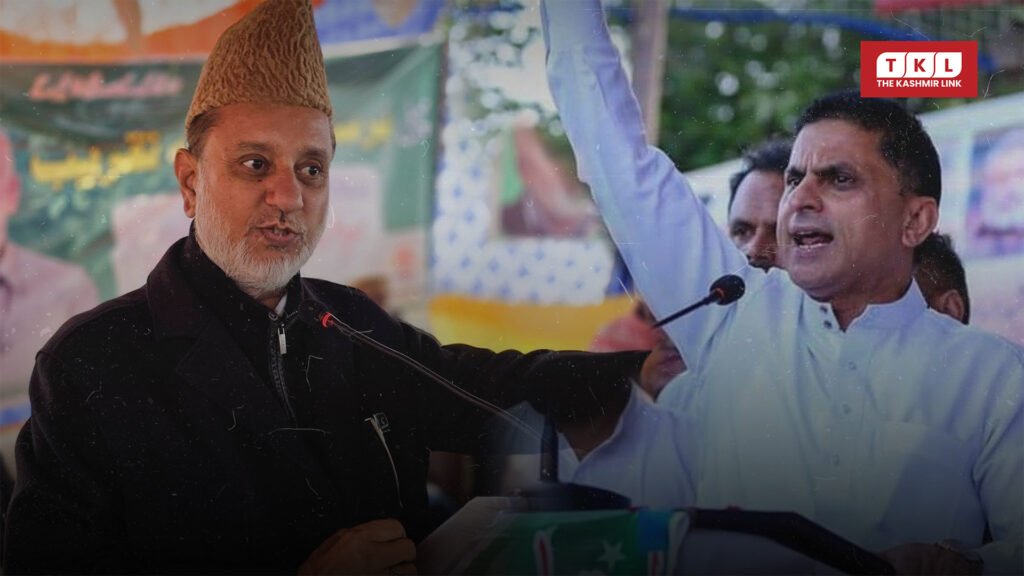
Muslim Conference – The defeat of Sardar Attique Ahmed Khan in LA-14 Western Bagh was not merely an electoral upset. It brought an end to decades of political dominance and exposed the changing equations of power, public sentiment and electoral alliances in Azad Kashmir.
For decades, Western Bagh was regarded as one of the most secure political strongholds in Azad Kashmir.
The constituency was not simply another electoral seat. It was the political heartland of the family of Sardar Abdul Qayyum Khan, a family whose influence had shaped electoral politics in the area for generations. His son, Sardar Attique Ahmed Khan, inherited and consolidated that political legacy, serving multiple times as prime minister of Azad Jammu and Kashmir and leading the Muslim Conference for more than two decades.
That political tradition appeared remarkably resilient.
Until the 2026 elections.
In LA-14 Western Bagh, Sardar Attique Ahmed Khan was decisively defeated by Sardar Sajid Iqbal Abbasi, a relatively new challenger on the electoral scene. The scale of the defeat was extraordinary: Abbasi secured 40,522 votes, against Attique Ahmed Khan’s 19,637, producing a margin of 20,885 votes. The final figures reported by different sources during counting varied slightly, but the decisive nature of the result was never in doubt.
The result immediately generated a bigger political question:
Muslim Conference – How did the Throne of Ghaziabad fall?
The answer lies not in a single factor, but in the convergence of several political currents—anti-establishment sentiment, the Joint Awami Action Committee movement, local development politics, candidate visibility, opposition consolidation and the changing value of political dynasties.
And perhaps most importantly, the Western Bagh election demonstrated that even deeply rooted political identities can become vulnerable when the electorate’s priorities change.
Muslim Conference – A Political Stronghold Built Over Generations
To understand the significance of Attique Ahmed Khan’s defeat, it is necessary to understand what Western Bagh represented.
The constituency, covering Dhirkot, had long been associated with the political influence of the Sardar Abdul Qayyum Khan family. Attique Ahmed Khan’s victory in the previous election had reinforced that legacy. In the 2021 election, he won LA-14 with 25,389 votes, defeating PTI’s Muhammad Latif Khalique by more than 8,000 votes.
That history created an important psychological dimension to the 2026 contest.
For supporters, the constituency represented political continuity. For opponents, however, the same continuity could be portrayed as political permanence—and therefore something that needed to be challenged.
This distinction became crucial.
The 2026 election was not simply a contest between Attique Ahmed Khan and Sajid Iqbal Abbasi.
It was, in many ways, a contest between political inheritance and political mobilisation.
One candidate entered the election carrying decades of political history.
The other entered with an argument that history alone could no longer determine the future.
Muslim Conference – The Candidate Matters
Political parties matter in elections.
But in Western Bagh, the candidate himself appears to have mattered enormously.
Sajid Iqbal Abbasi’s campaign placed strong emphasis on his personal presence in the constituency and his involvement in local issues.
Claims about contributions toward roads, water supply and other basic facilities formed part of the political narrative surrounding his candidacy.
Again, the importance of these claims is not necessarily whether every claim can be independently measured.
Their electoral importance lies in perception.
If voters believe that a candidate has remained accessible outside election season, that candidate gains an advantage that cannot easily be created through posters, rallies or party endorsements.
This is especially important in constituencies where personal relationships remain a significant part of electoral politics.
The contrast was striking.
Attique Ahmed Khan possessed enormous political capital accumulated over decades.
Sajid Iqbal Abbasi sought to convert grassroots presence into political capital.
In 2026, the latter proved more powerful.
The Scale of the Realignment
The final result is perhaps the clearest evidence of what happened.
| Candidate | Votes |
| Sajid Iqbal Abbasi | 40,522 |
| Sardar Attique Ahmed Khan | 19,637 |
| Victory Margin | 20,885 |
Sajid Iqbal Abbasi did not merely defeat Attique Ahmed Khan.
He received more than twice as many votes as his principal rival.
That is what makes the result politically significant.
A narrow defeat could have been explained through tactical voting, turnout variations or a temporary anti-incumbency wave.
A margin exceeding 20,000 votes suggests something broader.
It indicates that a substantial portion of the electorate was willing to abandon the constituency’s traditional political alignment.
And that is precisely what makes the result historic.
The End of a Dynasty?
It would, however, be premature to conclude that the political influence of the Ghaziabad family has permanently ended.
Political dynasties rarely disappear because of one election.
They can rebuild.
They can change alliances.
They can produce new candidates.
And they can benefit from political mistakes made by their successors.
But the 2026 result has unquestionably broken the perception of invincibility.
That psychological barrier may be more important than the actual loss of one Assembly seat.
For decades, voters and rival politicians knew that defeating the political establishment in Western Bagh was difficult.
Now they have witnessed it happen.
That changes the political calculation for the next election.
The opposition has learned that the stronghold can be breached.
The electorate has learned that political succession is possible.
And the political family itself has learned that its traditional formula is no longer guaranteed to work.
A New Question
The fall of one political establishment has simultaneously created another challenge:
Can Sajid Iqbal Abbasi build what he has just defeated?
Electoral victory and political consolidation are two different things.
Winning an election with a broad coalition is one achievement.
Maintaining that coalition while governing is another.
Abbasi’s post-election political moves will therefore be closely watched.
His alliance with the Pakistan Muslim League-Nawaz has already elevated his importance beyond the constituency.
On August 17, PML-N leader Rana Sanaullah publicly announced that Abbasi had joined hands with the party, with Abbasi himself formally announcing the alliance at a press conference. Sanaullah described him as having secured a strong mandate from the people of LA-14.
This alliance could provide Abbasi with access to government resources and political influence.
But it also creates expectations.
The voter who helped remove an established political figure will now expect the new representative to demonstrate that political change can translate into tangible improvements.
Roads, water, electricity, employment, education and public services will ultimately become the real test.
A Bigger Story About AJK Politics
There is another reason why Western Bagh deserves attention.
The constituency is an unusually clear example of a broader transformation taking place in Azad Kashmir politics.
The 2026 election came after years of growing public frustration, powerful street movements and an increasingly assertive electorate.
The Action Committee movement demonstrated the ability of organized public pressure to challenge established political narratives.
The Western Bagh election showed how those changing sentiments can eventually enter the ballot box.
This is why the result should not be dismissed as simply a personal defeat for Attique Ahmed Khan.
It may represent a transition from personality-driven politics toward issue-driven electoral competition—although it remains too early to say whether that transition will persist.


