




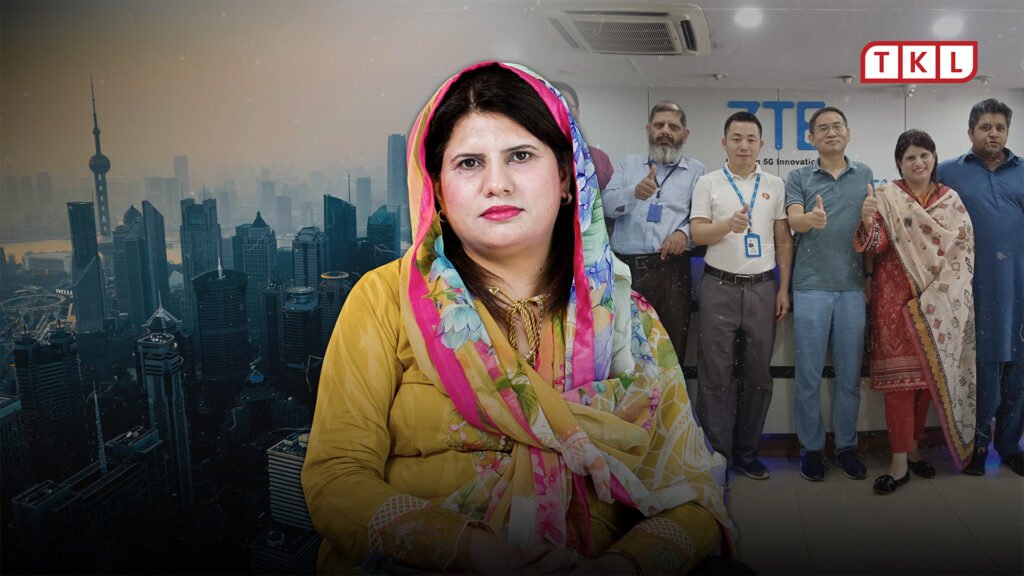
Deputy General Manager at ZTE Pakistan, Rabia Pervez, discusses her professional journey, Chinese workplace culture, international exposure and opportunities for women in logistics.
Rabia Pervez, Deputy General Manager at ZTE Pakistan, has spent around two decades building her career in logistics and supply chain management, a profession traditionally dominated by men in Pakistan.
An MS in Supply Chain Management and a gold medallist, Pervez began her professional journey in logistics and gradually progressed to a leadership position at the Chinese telecommunications company. She says working in an international organisation provided her with opportunities to develop professionally and gain exposure to different working environments.
One of the most significant aspects of her professional journey has been training in China. She travelled there twice for on-site training programmes, each lasting two to three weeks. The programmes focused on logistics, vendor management, international negotiations and cross-cultural understanding.
Working alongside professionals from more than 40 countries also allowed her to learn how different organisations approach professional challenges.
Pervez says the experience helped improve her time management and understanding of workplace discipline. She particularly appreciated the emphasis on professionalism, commitment and achieving targets.
She also highlighted the differences between Chinese and Pakistani workplace cultures. According to her, international organisations generally place greater emphasis on resolving problems and completing tasks, while workplace hierarchies in Pakistan can sometimes make direct communication between employees at different levels difficult.
Drawing on her experience of working with international and local vendors, she also pointed to differences in commitment and time management. She said unexpected disruptions, including strikes and road closures, can affect the performance of local service providers, while international partners often operate within clearly defined delivery commitments.
However, working in a Chinese organisation has not been without challenges. Pervez said language and cultural differences sometimes create communication gaps, particularly when dealing with correspondence in Chinese.
She explained that employees often have to adapt to the working language and cultural practices of their colleagues. Patience and flexibility, she added, have helped her navigate these challenges and treat them as opportunities to learn.
Her international experience also proved valuable when she managed the supply chain for a Chinese government-funded grant-aid project aimed at digitalising Pakistan Television (PTV).
The project involved delivering equipment worth millions of rupees from China to Pakistan. Pervez said managing the process required an understanding of customs regulations, local requirements and international procedures. She credited her training and practical exposure in China with helping her manage the entire supply chain process, from procurement and coordination to delivery.
Beyond her professional responsibilities, Pervez has also become a certified trainer at ZTE. She conducts online training sessions for employees in different countries, sharing knowledge and discussing professional challenges through monthly and quarterly sessions.
Discussing opportunities for women, she said logistics and supply chain management were once fields that many women hesitated to enter because of demanding responsibilities, site visits and operational challenges.
However, universities are increasingly offering specialised programmes and degrees, creating greater opportunities for women to pursue careers in the sector.
She encouraged young women to consider logistics and supply chain management as a promising professional field, emphasising the importance of confidence, continuous learning and focus.
Reflecting on her own experience of balancing professional and family responsibilities, Pervez said maintaining a clear distinction between the two had helped her manage both effectively.
Her message to young women is straightforward: believe in yourself, remain focused and continue learning. She believes these qualities can help women succeed in any professional field.


