


Children of the Monsoon: Pakistan at the Frontline of Climate Change

Pakistan today stands at a historic turning point. Caught between the melting glaciers of the north and the choking air of its cities, between repeated floods and an energy crisis, the country’s struggle with climate change is no longer a distant concern. It is here, reshaping lives, livelihoods, and the future.
Flawed Designs in a Changing Climate
Cross-drainage structures and flood defenses across the country were never designed for the scale of challenges we now face. Engineering standards that once assumed a “50-year flood” are outdated, because what was once a rare disaster may now arrive every 25 years. Instead of climate-resilient infrastructure, Pakistan still relies on conventional, short-sighted designs that worsen the problem rather than solve it.
The Urban Crisis: A Local Problem, Not Global
While the world debates global warming, Pakistan’s cities are drowning in their own negligence. Lahore competes with Delhi for the worst air quality, Karachi chokes with garbage that clogs drainage channels, and urban flooding grows more frequent. These are not abstract global climate issues — they are the result of poor governance and weak municipal systems. Without fixing local management, adaptation to climate change will remain impossible.
Energy Waste and Missed Opportunities
As an energy-importing country, Pakistan depends heavily on oil and gas, yet it wastes much of what it uses. Compared to Bangladesh, Pakistan consumes twice the energy to produce one unit of GDP; compared to Sri Lanka, two and a half times more. Solutions exist — decentralized solar, micro-hydel power, and targeted wind projects in the Gharo–Dhabeji belt — but without structural reform, these remain underutilized opportunities.
A History of Promises, Not Action
Pakistan’s environmental journey began with the Environmental Protection Ordinance of 1983 and gained international recognition with the 1992 National Conservation Strategy, praised at the Rio Conference. Yet after those lofty beginnings, progress stalled. A flood of documents, policies, and donor-driven projects followed, but implementation was weak. Once external funding ended, so did the work. Environment and climate change have never truly been mainstreamed into Pakistan’s governance.
Awareness at the Grassroots
Ordinary people — farmers, herdsmen, fishermen, even hunters — understand environmental change because it disrupts their daily lives. They see vanishing birds, shrinking rivers, and shifting seasons. Real transformation, however, requires spreading this awareness more widely. One model comes from environmental education: for decades, children in hundreds of schools learned through tree planting, recycling, and creative reuse projects. They carried these habits home, influencing families and communities. Such approaches plant the seeds of long-term change.
The Looming Threats
Two of the greatest dangers lie directly ahead:
- The collapse of glaciers in the Hindu Kush–Karakoram–Himalaya, releasing catastrophic floods on a scale comparable to the Flood of Noah.
- Rising temperatures during wheat sowing season, potentially halving yields and threatening food security on a scale similar to the famines of the Sahara.
These are not distant hypotheticals; they are foreseeable realities.
Mitigation vs. Adaptation: Pakistan’s Real Priority
Globally, the climate conversation centers on mitigation — cutting oil, gas, and coal. For Pakistan, however, adaptation is far more urgent. Community-based adaptation, supported by local development institutions, is the only sustainable way forward. Beyond infrastructure, the country needs strong foundations: quality education, healthcare, and skills that will help people survive and thrive in a harsher climate.
Policy vs. Practice: A Dangerous Gap
Pakistan has drafted climate change laws, prepared adaptation strategies, and produced impressive documents. Yet engineering practices, flood management, and infrastructure remain outdated. Policies call for resilience, but departments still rely on designs that make flooding worse. The contradiction between written policy and real-world practice could prove catastrophic as floods that once came once every two decades now arrive every five years.
The Monsoon Question
At its core, South Asia survives because of the monsoon. One and a half billion people live here because every year, monsoon rains arrive. Climate change threatens this rhythm. The jet stream that brings or withholds the monsoon is shifting, raising the terrifying possibility of prolonged droughts or erratic rainfall. For a region bound by rivers, irrigation, and centuries-old cultures, the disruption of the monsoon is an existential threat.
Migration and the Future
Internal migration within Pakistan — villagers moving to Karachi or other cities — is not necessarily a crisis. It can even be beneficial if ties to ancestral lands remain intact. But international migration, driven by rising seas in Bangladesh or the Maldives, will raise global challenges of survival and cooperation. These are issues the next century must confront.
Disaster Management: Learning Nothing?
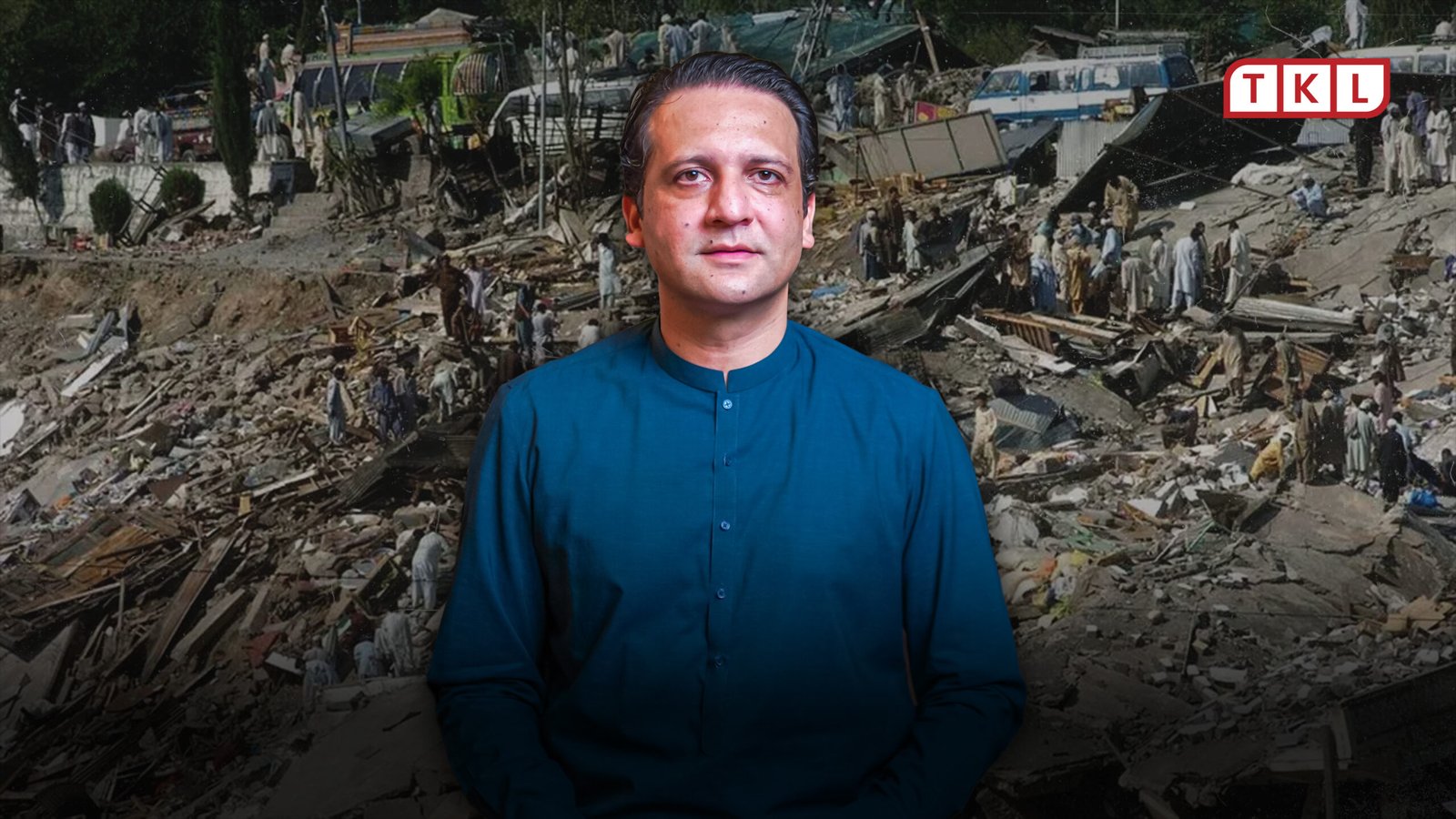
Institutions like ERRA, NDMA, and PDMA exist, but mostly in reactive mode. Schools and hospitals were rebuilt after earthquakes and floods, yet far more could have been achieved. As Brigadier Jan Nadir Khan once observed after leading rehabilitation in Kohistan: “We learned nothing.” His words may well describe Pakistan’s overall disaster management story — where each catastrophe is followed by rebuilding, but little long-term preparation.
The Only Path Forward: Cooperation and Adaptation
In the end, Pakistan cannot face these challenges alone. The Indus Waters Treaty partitioned rivers, leaving eastern rivers dry and destroying ecosystems. True resilience requires ecological flows, cooperation with India, and regional planning. Beyond politics, survival depends on cooperation. After all, as one speaker put it: “We are all children of the monsoon.”


