




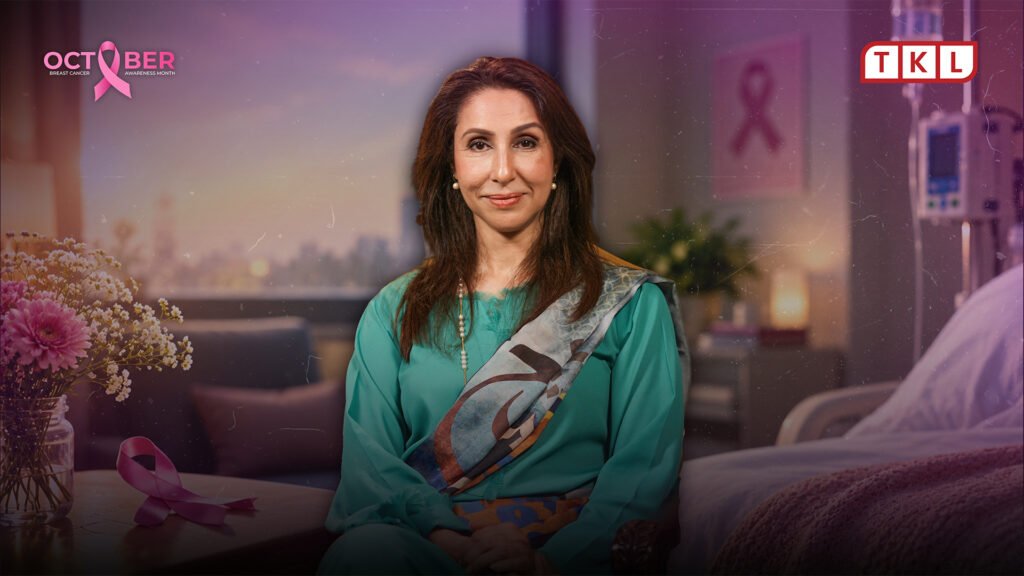
Cancer treatment is only one part of the journey. In the second episode of her conversation with The Kashmir Link, Aliya Agha discusses the emotional challenges of recovery, the importance of early detection and how cancer reshaped her understanding of life and purpose.
The end of cancer treatment does not necessarily mean the end of a patient’s struggles. For many survivors, the fear of the disease returning can remain long after their physical strength begins to recover.
In the second episode of her conversation with The Kashmir Link, Aliya Agha reflects on her experience of breast cancer, offering insights into the challenges patients face during treatment and the emotional journey that follows.
Recalling her chemotherapy sessions, Agha describes a period when even everyday activities required assistance. During the first few days after treatment, she needed help with meals and moving around. She also recalls how difficult it was for her family to understand her changing nutritional needs and determine how best to care for her.
Her experience, she says, highlights a significant gap in support for cancer patients and their caregivers. Families often need practical guidance on caring for patients at home, alongside emotional and psychological support. She believes support groups and better access to reliable information could help patients and their loved ones navigate this difficult period.
Cancer – The impact on families and children
Agha also draws attention to the emotional burden experienced by children when a parent develops cancer. Watching a mother or father become physically weaker can leave children frightened and uncertain about the future.
She argues that schools should recognise these challenges and provide safe spaces where children can discuss their fears and receive psychological support. Without such opportunities, children may keep their emotions to themselves, allowing distress to affect their well-being over time.
For Agha, cancer recovery involves more than medical treatment. Although physical strength may gradually return, the fear of recurrence can remain a persistent concern. She describes this uncertainty as one of the most difficult aspects of life after cancer.
Faith and spirituality, she explains, have helped her find peace and perspective. She emphasises that spiritual practices should complement, rather than replace, medical treatment and professional advice.
Cancer – A call for screening and family support
Agha urges women to take their health seriously and seek appropriate screening and medical assessment. She cautions against assuming that a person is safe from cancer simply because there is no known family history.
She also calls on men to play a more active role in supporting women’s health. Husbands, fathers, brothers and sons, she says, should encourage women in their families to seek medical advice when they notice unusual changes and help them access recommended screening.
Her message is that fear should not become a barrier to seeking care. Early detection and timely medical attention can make an important difference, although screening recommendations should be guided by individual risk and professional advice.
Cancer – Finding purpose beyond illness
One of the most striking aspects of Agha’s story is how she approached life after treatment. Rather than seeing cancer as the end of her ambitions, she describes it as a turning point that encouraged her to explore new opportunities.
She became involved in several ventures, including Margalla Tribune, the MT Out Loud podcast and The Dice Forum, a thought-leadership platform. She also pursued interests in writing, climate change and establishing libraries in underserved schools.
For Agha, these activities are not simply about professional success or financial gain. They reflect a desire to remain engaged with the world, share knowledge and contribute to causes that matter to her.
She encourages people recovering from cancer not to regard their lives as over. Strength can return, new directions can emerge, and life can acquire a different meaning after illness.
Her message to women undergoing treatment is one of patience, hope and gratitude: the difficult period will pass, and there can still be much to look forward to.
Through her experience, Agha offers a reminder that supporting people affected by cancer requires more than medical care alone. It also calls for informed families, compassionate communities, psychological support and greater awareness of the importance of screening and timely treatment.


