




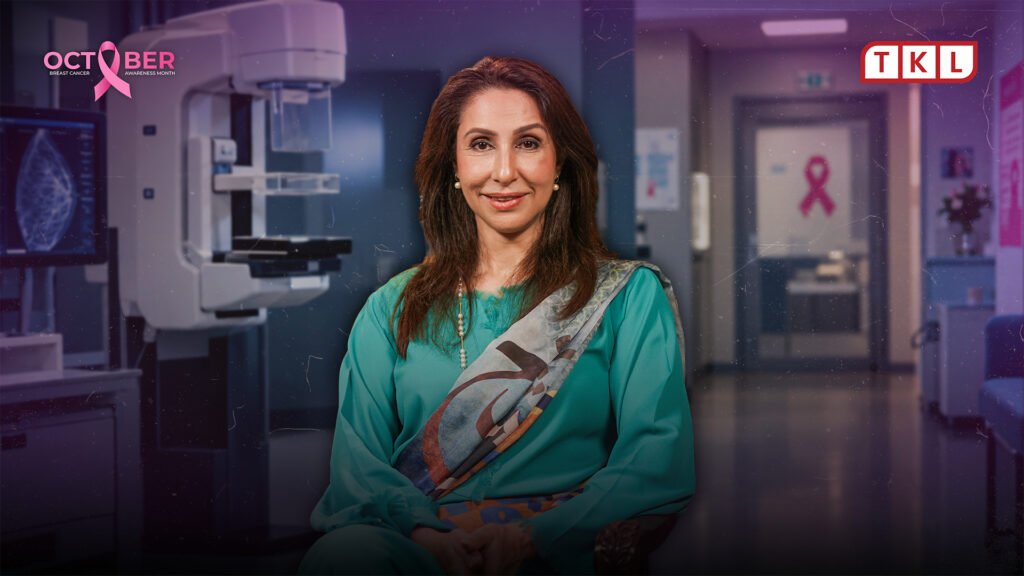
Breast Cancer – A Stage One diagnosis changed the life of lawyer and entrepreneur Alia Agha. Today, she is using her experience to encourage women to recognise warning signs, seek medical advice and overcome the fear and embarrassment that can delay diagnosis.
Alia Agha had always considered herself a physically active person. A lawyer and entrepreneur, she had spent two decades working in corporate law and the development sector, building a professional life that took her from Karachi to the United Kingdom. Sports, exercise and learning new skills had long been part of her routine. Cancer, however, was something she knew relatively little about.
Her life changed when she discovered a lump in her breast.
Alia sought medical attention and underwent a mammogram followed by an ultrasound. When doctors advised further investigation, she began to understand that the lump could be something more serious than she had initially imagined. She was eventually diagnosed with Stage One breast cancer.
Looking back, Alia recalls an earlier warning sign that she had overlooked. Seven months before discovering the breast lump, she had noticed a small, pimple-like lump in her armpit. She discussed it with a family member but was reassured that it was probably nothing. The idea of visiting a doctor the following day was raised, but that visit never happened.
At the time, the lump appeared so insignificant that she thought little more of it.
It was only after her breast cancer diagnosis that she realised how important it was to have unusual changes examined by a medical professional. Her experience became a lesson she now wants other women to learn without having to go through the same uncertainty themselves.
“Whenever you feel a lump, even something that looks as small as a pimple in your armpit, get it checked,” is the message she conveys.
Not every lump indicates cancer, but a new or unusual lump should not be dismissed without appropriate medical assessment.
Breast Cancer – Understanding the disease
Alia admits that before her diagnosis, she did not fully understand the medical terminology associated with cancer. She was unfamiliar with the role of an oncologist and had little knowledge of treatments such as chemotherapy and radiation therapy.
Her experience taught her that cancer treatment is not the same for every patient. Depending on the type and stage of the disease, doctors may recommend surgery, chemotherapy, radiation therapy or a combination of treatments.
In her case, the cancer was diagnosed at Stage One. She stresses that treatment decisions must be made by qualified doctors, as the appropriate approach depends on the individual patient’s circumstances.
She also believes that greater public awareness can help women respond more confidently when they notice something unusual. Understanding the basics of breast health, knowing where to seek medical advice and asking questions about treatment can make an intimidating experience easier to navigate.
Breast Cancer – The silence surrounding breast cancer
For Alia, one of the biggest challenges is not simply the disease itself but the embarrassment that often surrounds discussions about women’s health.
In communities where conversations about breasts and reproductive health remain uncomfortable, women may hesitate to discuss symptoms even with their families. Some delay seeking medical attention because they feel ashamed, while others dismiss changes because they are young or believe cancer affects only older women.
Alia argues that embarrassment should never become a barrier to seeking help. Women who feel uncomfortable discussing symptoms with relatives can approach a hospital, diagnostic centre or qualified healthcare professional directly.
She recalls meeting a young woman who had developed breast cancer at the age of 18. Because she was so young, she did not initially understand what was happening. By the time she sought help, the disease had reached an advanced stage.
The experience left a lasting impression on Alia. It reinforced her belief that awareness must reach women of all ages and that families and communities have a responsibility to take health concerns seriously.
Breast Cancer – When fear becomes another obstacle
Cancer treatment can bring physical and emotional challenges, and Alia believes that fear of these changes can sometimes influence a patient’s decisions.
One concern she encountered was the fear of losing hair during chemotherapy. For many women, hair is closely associated with their identity, confidence and sense of beauty. The prospect of losing it can be deeply distressing.
During her recovery, Alia met a woman in her thirties who had two children and had been diagnosed with Stage Four cancer that had spread to her bones. According to Alia’s account, the woman was worried about treatment-related hair loss and ultimately decided against the recommended treatment. She later pursued an alternative approach and died several months afterwards.
The experience deeply affected Alia and strengthened her conviction that patients need accurate information, compassionate support and clear explanations of the benefits and risks of treatment.
Her message is not that every patient will experience the same outcome, but that fear should be discussed openly with doctors rather than becoming a reason to abandon recommended care without understanding the consequences.
Patients should be encouraged to discuss treatment options, side effects and supportive care with their medical teams before making decisions.
Early detection and timely medical advice
Alia’s experience has made breast cancer awareness a personal mission. She urges women to pay attention to changes in their breasts, including a new lump, changes in shape, unusual discharge or other persistent abnormalities.
She also encourages people to support friends and relatives who may be frightened or reluctant to seek medical attention. Rather than dismissing someone’s concerns or reassuring them without evidence, families should encourage appropriate medical assessment.
Breast cancer can occur at different ages, and men can develop it too. Being young does not automatically rule out the possibility of the disease. At the same time, an unusual symptom does not necessarily mean someone has cancer; proper evaluation is essential.
Screening recommendations depend on factors such as age, family history and individual risk. Anyone concerned about symptoms or their personal risk should seek advice from a qualified healthcare professional about appropriate examinations and tests.
For Alia, awareness is about replacing silence with informed action. The earlier a potential problem is investigated, the sooner a patient can understand what is happening and discuss appropriate care.
A message of hope
Beyond the medical challenges, Alia speaks about the emotional strength required to navigate a cancer diagnosis. She acknowledges that the experience can be frightening, particularly for someone encountering unfamiliar terminology, treatment decisions and uncertainty about the future.
One of the most meaningful lessons she received came from a young woman who had herself endured a difficult cancer journey.
“You will get through this,” the woman told her.
The words stayed with Alia. They reminded her that a diagnosis does not erase a person’s strength, identity or capacity to face difficult circumstances. Hope, she believes, matters alongside practical support and appropriate medical care.
Now, through conversations like this one, she wants to help other women recognise warning signs, ask for help without embarrassment and approach treatment decisions with reliable medical guidance.
Her story is ultimately about more than surviving cancer. It is about turning a personal experience into an opportunity to educate others, challenge social stigma and encourage people to take their health concerns seriously.
For every woman who has noticed an unusual change but is afraid to seek help, Alia’s message is straightforward: do not ignore it, do not be embarrassed to talk about it, and do not delay getting appropriate medical advice.


