




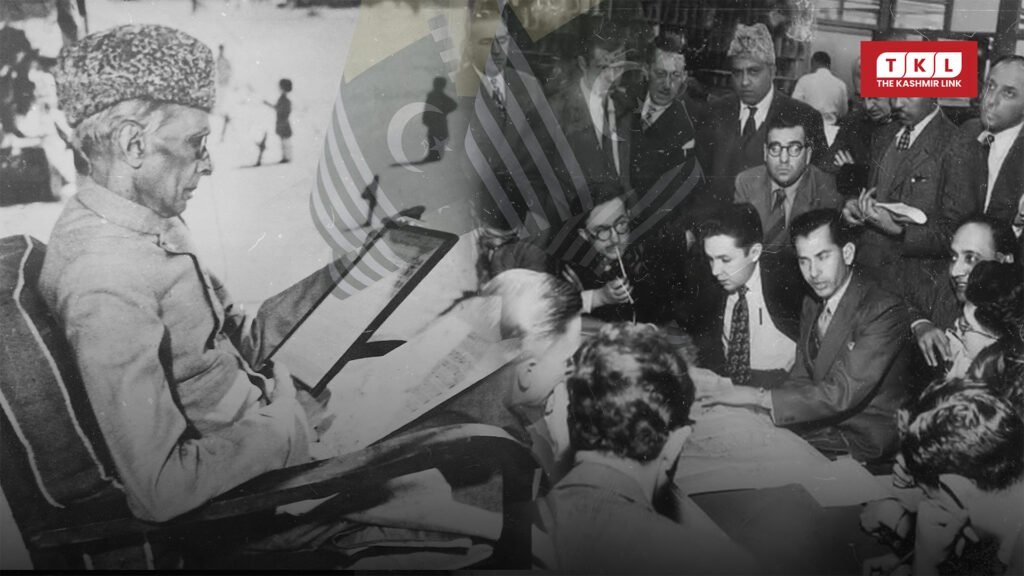
Azad Kashmir – From the historic decision of July 19, 1947, to the challenges of today, the story of Azad Kashmir is one of political struggle, sacrifice, identity and an enduring relationship with Pakistan.
July 19, 1947.
Pakistan was still almost a month away from appearing on the world map.
Yet in Srinagar, Kashmir’s political leadership was already debating a question that would shape the region’s future for generations.
Leaders of the All Jammu and Kashmir Muslim Conference had gathered for a historic meeting. A resolution expressing the desire for the State of Jammu and Kashmir to accede to Pakistan was presented and unanimously approved.
It was more than a political resolution.
It represented a vision of the future — a decision made at a time when Pakistan itself had not yet come into existence.
Azad Kashmir – A year of upheaval
Then came August 1947.
Pakistan was created, but the future of Jammu and Kashmir remained uncertain.
Across Poonch, Bagh and Sudhnoti, resistance against the Dogra government intensified. Many people from these areas had served in the British Army and had military experience. In 1947, they became part of the struggle unfolding across the region.
The mountains that had once been home to ordinary communities became the scene of armed conflict.
There was uncertainty in homes, fear among families and a growing sense that the future of Kashmir was being decided through events taking place on the ground.
In October, the situation reached a decisive stage.
On October 24, 1947, the Azad Government was established under the leadership of Sardar Muhammad Ibrahim Khan.
A new political reality had emerged.
But behind the political developments were countless stories of sacrifice.
Families were displaced. Lives were lost. Communities were transformed.
The history of Azad Kashmir cannot therefore be understood only through dates and political decisions. It must also be understood through the people who lived through those extraordinary times.
A relationship remembered every August
Nearly eight decades later, the legacy of 1947 remains visible across Azad Kashmir.
Every year on August 14, Pakistan’s Independence Day is marked across the region.
Schools hold ceremonies.
Children carry the national flag.
National songs echo through towns and villages.
And the green and white flag flies against the backdrop of the mountains.
For many, August 14 is a reminder of a historical relationship that began before Pakistan’s creation and continued through the upheavals of 1947.
But history is not only about remembering the past.
It is also about understanding the present.
A region facing difficult questions
Today, people across Azad Kashmir are raising concerns about issues that directly affect their everyday lives.
Electricity.
Flour.
Employment.
Economic difficulties.
And governance.
These concerns have become part of a wider public debate about the future of the region.
Recent protests have also resulted in the loss of precious lives.
For the families left behind, these are not political statistics.
They are empty chairs at home.
They are unanswered questions.
They are memories of sons who did not return and parents who continue to grieve.
And perhaps this is where every political discussion needs to pause for a moment.
Behind every headline is a human being.
Behind every statistic is a family.
And behind every political dispute are people whose lives continue long after the cameras have left.
Azad Kashmir – From disagreement to dialogue
The difficult question facing Azad Kashmir today is not simply how to resolve individual disputes.
It is how to prevent disagreement from becoming permanent bitterness.
People have the right to raise their voices about their problems.
They have the right to demand better services, greater economic opportunity and responsive governance.
But with those rights also comes responsibility.
Public movements must remain peaceful.
Political disagreements must not become hatred.
And differences of opinion must not destroy the social fabric that holds communities together.
This is where political leadership has a particularly important role.
Politicians can either deepen divisions or help bridge them.
They can turn public anger into constructive negotiations.
They can take people’s concerns to the appropriate forums.
And they can help create space for dialogue and reconciliation.
Politics is not only about winning elections or gaining power.
In difficult times, it is also about bringing people together.
A responsibility shared by everyone
The responsibility does not belong to political leaders alone.
Citizens also have a role to play.
The right to protest carries a responsibility to remain peaceful.
The right to disagree carries a responsibility to respect others.
And the right to demand change carries a responsibility not to allow hatred to take control.
Azad Kashmir’s greatest strength has always been its people.
Its mountains have witnessed conflict and sacrifice, but they have also witnessed resilience, community and hope.
That spirit is needed now more than ever.
What do we leave behind?
July 19, 1947, was a historic moment.
October 24, 1947, created another defining chapter in the history of Azad Kashmir.
And every August 14, the Pakistani flag flies once again across its mountains.
But a flag is more than a piece of cloth.
It carries history.
It carries memories.
It carries sacrifices.
And, most importantly, it carries people’s hopes for the future.
That is why August 14 should not only be a day of celebration.
It should also be a moment of reflection.
A moment to remember those who sacrificed.
A moment to listen to those who are hurting.
And a moment to think about what kind of future we want to leave for the next generation.
The mountains of Azad Kashmir have seen war.
They have seen sacrifice.
They have seen happiness.
And they have seen sorrow.
Perhaps now they deserve to see something else:
Dialogue.
Unity.
Reconciliation.
And hope.
Because history does not only tell us where we came from.
It also asks us a much more difficult question:
What are we leaving behind for the generations to come?


