




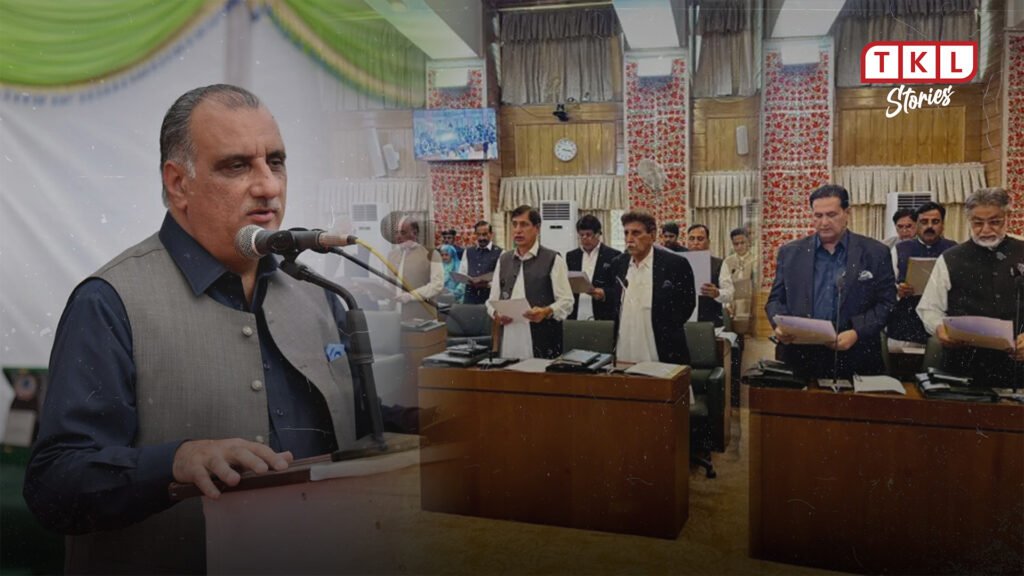
AJK Presidential Election – Azad Jammu and Kashmir is finally set to elect a new President on September 24, nearly eight months after the office fell vacant following the death of Barrister Sultan Mahmood Chaudhry.
The AJK Election Commission has announced September 19 for the filing of nomination papers, with scrutiny scheduled for the same day. Candidates can withdraw their nominations by 11:30am on September 23, while polling will be held at the Legislative Assembly Secretariat on September 24 from 10am to 1pm. The result will be announced after counting on the same day.
The election will bring an end to a prolonged vacancy in the constitutional office, but the delay has raised questions because the AJK Interim Constitution contains a specific provision governing a casual vacancy in the presidency.
AJK Presidential Election – What does the Constitution say?
Under Article 9 of the Azad Jammu and Kashmir Interim Constitution, when the office of President falls vacant because of death, resignation or another cause, the Speaker of the Legislative Assembly performs the President’s functions until a new President is elected.
The same article requires the Speaker to cause an election to be held within 30 days of the vacancy. The exception is where the Assembly has been dissolved; in that situation, the election is to be held within 30 days of the general elections.
The presidency became vacant following Barrister Sultan Mahmood Chaudhry’s death in January 2026. The office was subsequently handled by the Speaker in an acting capacity.
The Election Commission, however, did not issue the presidential election schedule at that time.
In March, the Commission said it required clarification from the Legislative Assembly Secretariat regarding the formal notification declaring the presidential office vacant. According to the Commission’s position, such a notification was necessary before it could issue the election schedule.
That procedural dispute became one of the key explanations for why the election did not take place within the constitutional 30-day period.
AJK Presidential Election – How is the President elected?
Unlike a direct election, the President of AJK is elected by the members of the Legislative Assembly.
Article 5 of the Interim Constitution provides that the President is elected by a majority of the total membership of the Assembly.
The constitutional text further provides that if no candidate secures that majority in the first poll, a second poll is held between the two candidates who receive the highest numbers of votes. In the second poll, the candidate securing a majority of the members present and voting is declared elected.
The election is conducted under the control and supervision of the Chief Election Commissioner.
The President serves a five-year term.
AJK Presidential Election – How many votes are required?
The AJK Legislative Assembly has 53 seats in total.
A majority of the total membership therefore requires 27 votes in the first poll.
The present Assembly, however, has 46 members because elections could not be held for seven of the 45 directly elected seats. Five of those seats are in Poonch and two are in Sudhnoti, where polling could not take place because of the law-and-order situation.
The important constitutional point is that the presidential election is based on the total membership of the Assembly, rather than simply the number of members currently present.
Therefore, the seven vacant seats do not automatically reduce the constitutional threshold from 27.
If no candidate obtains 27 votes in the first poll, the Constitution provides for a second poll between the two candidates with the highest vote totals, with the winner determined by a majority of members present and voting.
What is the current political arithmetic?
The 46-member Assembly currently consists of 31 PML-N members and 14 PPP members, while one member of the Awami Dast-o-Bazu Party, Sajid Iqbal Abbasi, has allied with the PML-N. This gives the PML-N and its allied member a combined strength of 32.
This means the PML-N-led side has more than the 27 votes required for victory in the first poll, assuming all of its members vote together and the current numbers remain unchanged.
Najeeb Naqi or Shah Ghulam Qadir?
The presidential contest has also generated political interest within the PML-N.
Several names had reportedly been under consideration, including former health minister Dr Muhammad Najeeb Naqi Khan, PML-N AJK president Shah Ghulam Qadir and former federal minister Mushtaq Minhas.
The PML-N has now settled on Dr Muhammad Najeeb Naqi Khan.
According to Punjab Senior Minister Marriyum Aurangzeb, PML-N President Nawaz Sharif nominated Dr Najeeb Naqi for the office and directed him to submit his nomination papers.
Shah Ghulam Qadir’s name had also been prominent in discussions over the presidency. He had been among the leading contenders for the office of Prime Minister following the 2026 elections, but the PML-N leadership ultimately nominated Barrister Iftikhar Gillani for Prime Minister.
Claims about Shah Ghulam Qadir’s position on the presidential office — including reports that he declined the offer — should be distinguished from the officially confirmed decision: the party has nominated Dr Najeeb Naqi, while the reported reasons for Shah Ghulam Qadir not being the nominee remain based on political sources rather than a formal public statement from him.
What happens next?
The formal process begins on September 19, when presidential candidates will submit their nomination papers between 10am and noon. The Chief Election Commissioner will act as the returning officer, and scrutiny will take place on the same day.
Candidates will have until 11:30am on September 23 to withdraw their nominations.
The Assembly will then meet on September 24 to elect the new President of Azad Jammu and Kashmir.
After months of constitutional and procedural uncertainty, the election will finally determine who takes over the state’s highest constitutional office for the next five-year term.


