
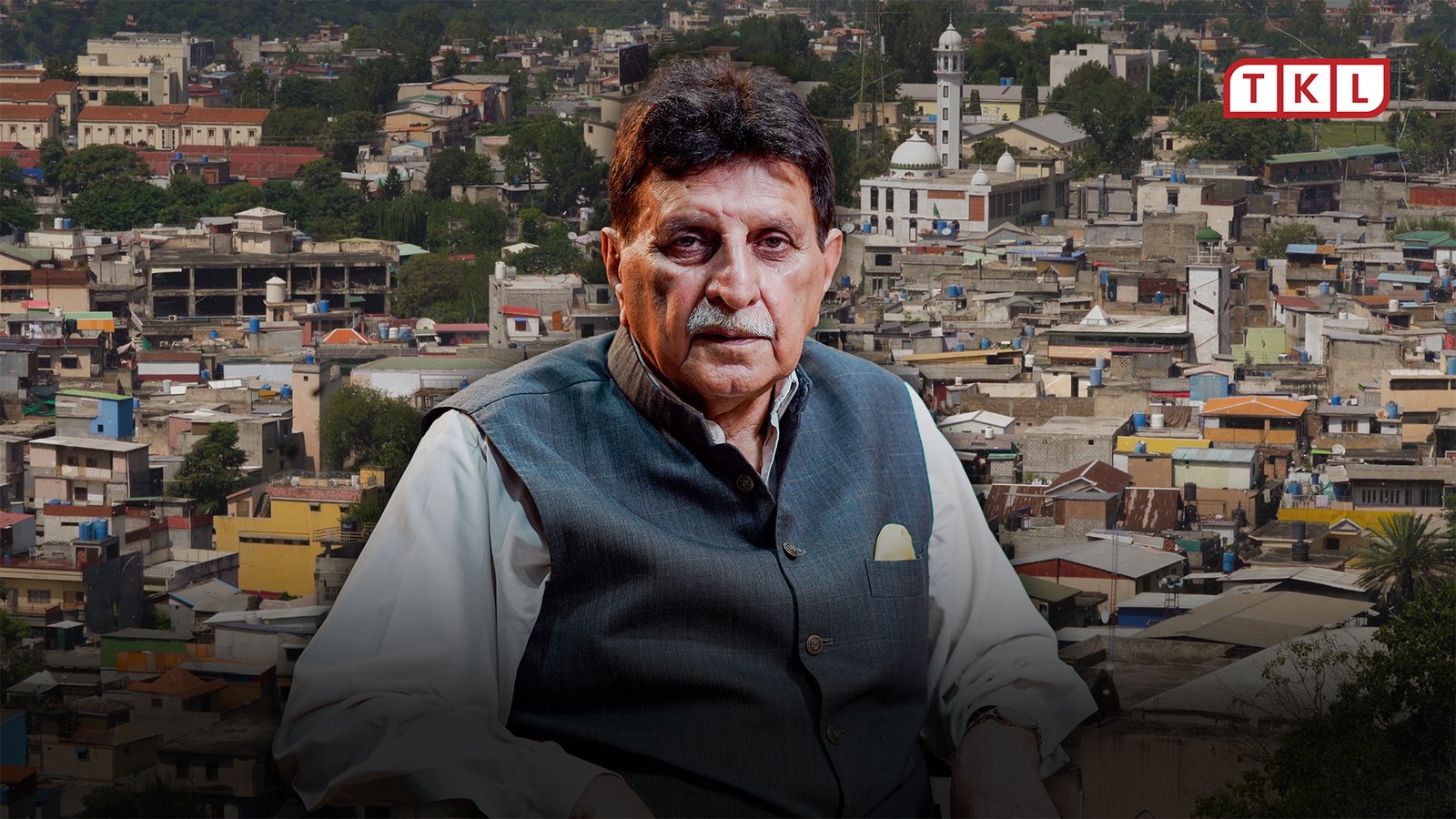
Can the New Government Restore Normalcy in AJK?

AJK – What began as a protest movement in Azad Kashmir has, after nearly three months of unrest, evolved into a wider political and social crisis, disrupting daily life across the territory and leaving the newly formed government facing a difficult question: how and when can normal life return?
Protests, strikes and prolonged tension in Rawalakot and other parts of Azad Kashmir have affected almost every aspect of life. Dozens of people have lost their lives during the period of unrest, while many others have been injured.
Markets have remained closed for extended periods, businesses have suffered losses and road blockades have disrupted transportation. Prolonged internet disruptions have further complicated communication, banking and other routine activities, while the closure of educational institutions has affected thousands of students.
For ordinary citizens, the crisis has increasingly moved beyond questions of politics and governance. Their concerns are now deeply practical: when will markets function normally, when will educational institutions operate without disruption, and when will roads and public spaces become peaceful enough for people to resume their daily routines without fear?
AJK – A crisis that survived the elections
The unrest also coincided with a major political transition in Azad Kashmir.
Despite the tense environment, elections were held in most parts of the state. A new Legislative Assembly was subsequently formed, newly elected members took their oaths, and a new government and prime minister assumed office.
But the formation of a new political administration has not automatically answered the questions created by months of unrest.
The central challenge before the new leadership is therefore not simply how to run the government, but how to address the grievances that fuelled the protests and rebuild confidence between citizens and state institutions.
For the new government, restoring normalcy may prove to be as important as managing the affairs of the administration itself.
AJK – The human cost
Behind the political debate are families who have lost loved ones during the unrest.
For them, the crisis is not an abstract political dispute. It is a personal tragedy.
They want to know who was responsible for the deaths, why their family members lost their lives and whether those incidents will be investigated impartially.
They also want assurances that similar incidents will not be repeated.
These questions cannot simply be answered through political statements. They require credible investigations, accountability and, where appropriate, access to justice.
For a society emerging from a period of violence and confrontation, establishing the truth about what happened may be an essential step towards rebuilding trust.
AJK – The new government’s biggest test
The new political leadership has inherited a crisis that cannot be resolved through administrative measures alone.
The government will have to engage with the protesters and listen to their concerns. At the same time, those leading the protest movement will face the challenge of keeping the door to dialogue open and ensuring that their demands are pursued through peaceful means.
Political parties, too, will have to decide whether they view the crisis primarily through the lens of government versus opposition or as a wider issue concerning the future of Azad Kashmir.
The distinction is important.
Governments change, opposition parties come and go, and political alliances evolve. But the underlying grievances that produced the protests can remain.
AJK – Negotiations rather than confrontation
In a democratic society, disagreement and protest are legitimate parts of political life. Governments, likewise, have the right and responsibility to maintain public order.
But when political disagreements begin to impose a sustained cost on ordinary citizens, the consequences extend beyond politics.
Employment, education, business activity, freedom of movement and peace are fundamental needs of any society. Prolonged disruption in these areas can deepen public frustration and create new grievances.
That is why negotiations may offer the most sustainable way forward.
A temporary agreement that ends a protest without addressing its underlying causes may produce calm, but not necessarily a solution.
If the grievances remain unresolved, the same crisis can return in another form.
Beyond temporary calm
The question facing Azad Kashmir is therefore not simply whether the current protests will end.
The more important question is whether the issues behind the protests will be resolved.
A lasting solution would require meaningful dialogue, credible implementation of agreements, protection of fundamental rights, accountability for violence and a political process capable of addressing legitimate public concerns.
The new government has an opportunity to move the state away from a cycle in which protests lead to confrontation, confrontation produces casualties, and temporary agreements are followed by renewed mistrust.
Whether it can seize that opportunity will determine much more than the fate of the current administration.
For the people of Azad Kashmir, the demand is increasingly straightforward.
They want their markets open, their children back in classrooms, their roads peaceful and their livelihoods restored.
And above all, after months of protests, strikes, violence, uncertainty and political upheaval, they want to know:
When will Azad Kashmir finally return to normal life?


