


AJK Election – Azad Jammu and Kashmir (AJK) finds itself at a critical political crossroads where the election calendar appears increasingly disconnected from realities on the ground. While the Election Commission is moving ahead with preparations for the general elections scheduled for July 27, 2026, widespread protests, security concerns, the possibility of communication blackouts, and growing political uncertainty have raised an important question: Can the mere conduct of elections guarantee political stability?
The question matters because elections are about far more than casting a ballot on polling day. A credible democratic process requires candidates to campaign freely, voters to access information and engage with competing political visions, the media to report without restrictions, and political stakeholders to have confidence in the integrity of the process. When any one of these pillars is weakened, the credibility of the election inevitably comes into question.
From an administrative standpoint, preparations appear largely complete. According to the Election Commission’s final polling scheme, 3,804,385 registered voters will elect representatives to the 45-member Azad Kashmir Legislative Assembly, including 2,001,655 men and 1,802,715 women. To facilitate voting, authorities have established 6,983 polling stations and 10,913 polling booths.
Among the 33 territorial constituencies, LA-7 Bhimber-III has the largest electorate. Among the 12 refugee constituencies located across Pakistan, LA-34 Jammu-I and LA-38 Jammu-V are the largest, while LA-40 Kashmir Valley-I (Sindh and Balochistan) is the smallest, with just 2,457 registered voters.
The electoral contest also appears highly competitive on paper. A total of 852 candidates, representing 24 registered political parties as well as independent candidates, are contesting the elections. Of these, 726 candidates are competing for the 33 territorial seats, while 126 candidates are contesting the 12 refugee seats. Kotli district alone has the highest number of candidates, with 135 contestants.
Yet an important question remains: Do numbers alone make an election democratic?
For decades, electoral politics in Azad Kashmir has revolved around a handful of major political parties, influential local families, and traditional biradari (clan) networks. The competition between the Pakistan Muslim League (N), Pakistan Peoples Party (PPP), Pakistan Tehreek-e-Insaf (PTI), and the All Jammu and Kashmir Muslim Conference has largely shaped the region’s political landscape.
Over the past year, however, that pattern has been challenged by the emergence of the Joint Awami Action Committee (JAAC). Initially formed around economic grievances, the movement has brought issues such as electricity tariffs, flour prices, inflation, and government privileges to the centre of public discourse. For perhaps the first time in recent political history, socioeconomic concerns have begun to overshadow conventional party politics.
The situation has become even more unusual following Pakistan Tehreek-e-Insaf’s decision to boycott the elections. The absence of one of the region’s major political forces has altered the dynamics of the contest and has prompted debate over the representative character of the mandate that will ultimately emerge.
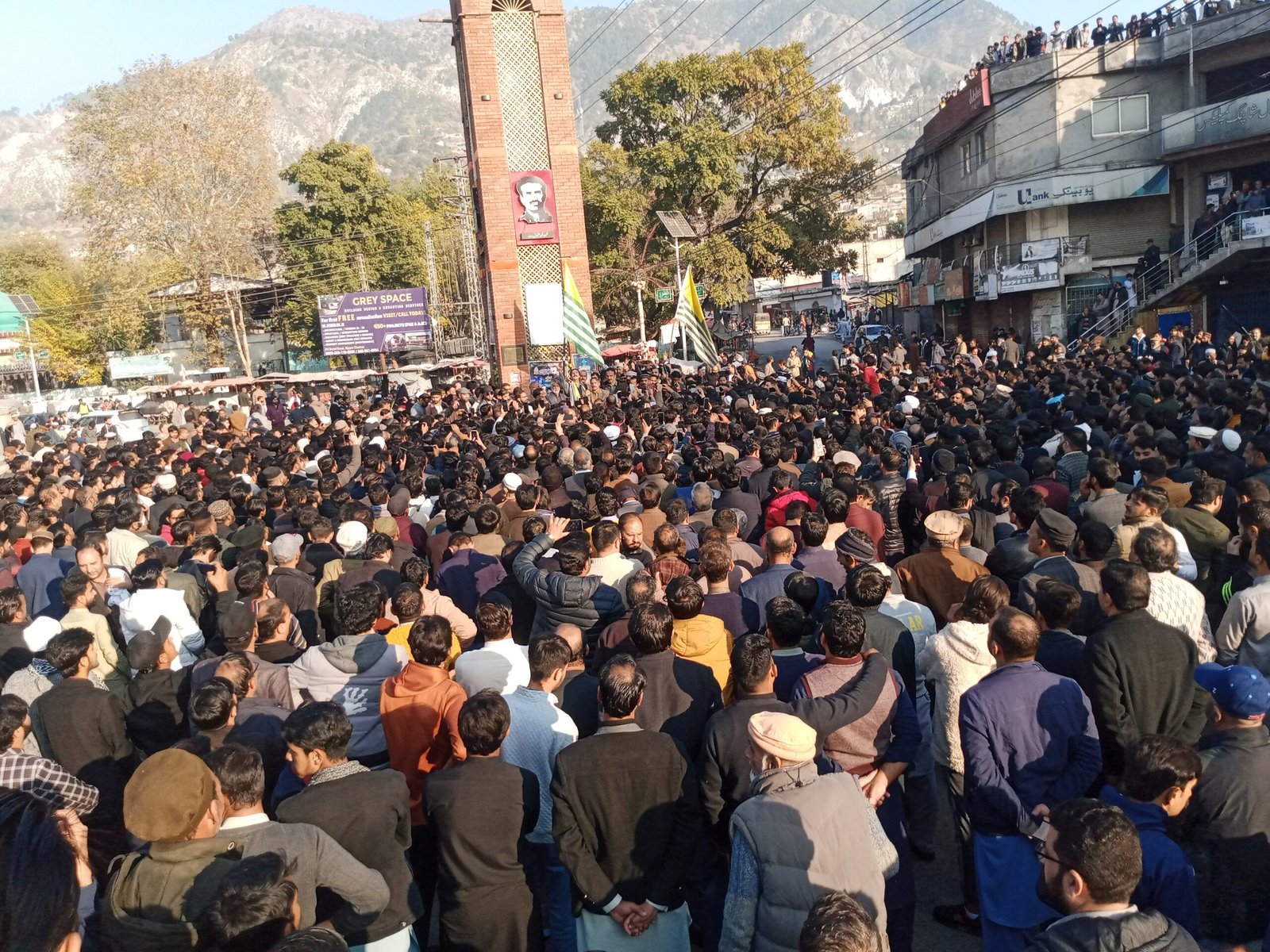
The election campaign itself has also departed significantly from past practice. Reports from Neelum, Poonch, Bagh, and Muzaffarabad indicate that candidates from mainstream political parties have faced protests in several constituencies, while some public meetings and corner gatherings have been disrupted.
The protesters argue that political activity should not proceed as normal until lasting solutions are found to issues such as electricity subsidies, flour prices, and what they describe as excessive government privileges.
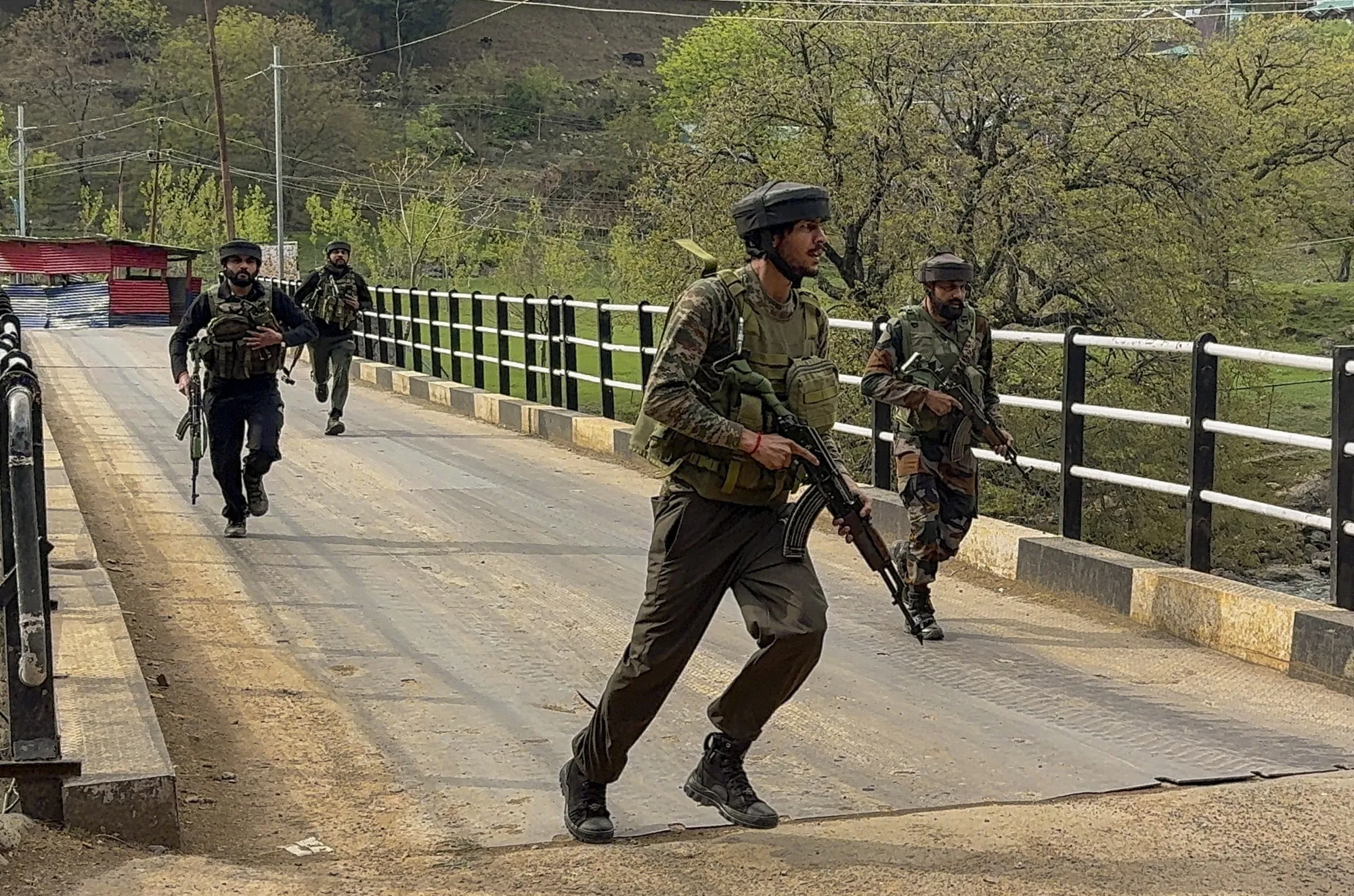
At the same time, restrictions imposed under Section 144, heightened security measures, and road closures in certain areas have further constrained electioneering. When candidates are unable to reach their own constituents, the very purpose of an election campaign is undermined.
Questions surrounding electoral transparency are not new in Azad Kashmir. For decades, critics have argued that whichever party forms the federal government in Islamabad tends to perform strongly in AJK elections as well. Allegations regarding the use of development funds, administrative influence, and state resources have frequently accompanied previous electoral contests.
Similarly, elections for the 12 refugee constituencies have long attracted criticism over alleged irregularities and claims of bogus voting, although these seats remain constitutionally protected.
This election cycle has also produced new concerns.
During the preparation of electoral rolls, technical issues related to NADRA’s data integration reportedly resulted in approximately 167,000 voters either disappearing from voter lists or being assigned to incorrect constituencies. Although the Election Commission later announced that these issues had been corrected, the episode nevertheless affected public confidence in the electoral process.
Another concern relates to election-day communications. If internet or mobile services are suspended, observers fear that the Election Commission’s Result Management System (RMS) could be disrupted, forcing greater reliance on the manual transmission of results. Whether justified or not, such circumstances are likely to intensify allegations regarding transparency.
Equally important is the role of independent oversight. The more limited the access of journalists, civil society organisations, and independent election observers, the more difficult it becomes to build public confidence in the process. Transparency depends not only on fair procedures but also on the ability of those procedures to be independently observed.
Against this backdrop, perhaps the most significant development is the Joint Awami Action Committee’s long march towards Muzaffarabad on July 22. Among the movement’s demands is the abolition of the 12 refugee seats—a demand that directly challenges an arrangement protected under the constitutional framework of Azad Kashmir.
As a result, the dispute has evolved beyond a political disagreement into a constitutional one. Unless a meaningful breakthrough is achieved before July 22, deteriorating security conditions could directly affect electoral logistics and polling preparations.
Ultimately, democracy is measured not simply by the counting of votes but by the confidence citizens place in the process itself. If voters believe they have been denied a genuine opportunity to hear competing viewpoints, question candidates, and make informed choices, elections may remain legally valid while lacking political and moral legitimacy.
Azad Kashmir is arguably entering one of the most sensitive phases in its recent political history. The coming weeks will determine not only which political party forms the next government but also whether the region moves toward renewed political consensus or deeper polarisation, prolonged protests, and constitutional uncertainty.
The July 27 elections are undoubtedly significant. Yet an even more important question remains unanswered: Will the mandate that emerges from these elections be capable of restoring trust between the public, political parties, and state institutions?
If the answer is no, then the central challenge will not be whether elections were held—but whether they were accepted. And that may prove to be the defining political test facing Azad Kashmir today.